A Recap of the 2026 Jurassic Mile® Dino Dig Season
A Recap of the 2026 Jurassic Mile® Dino Dig Season
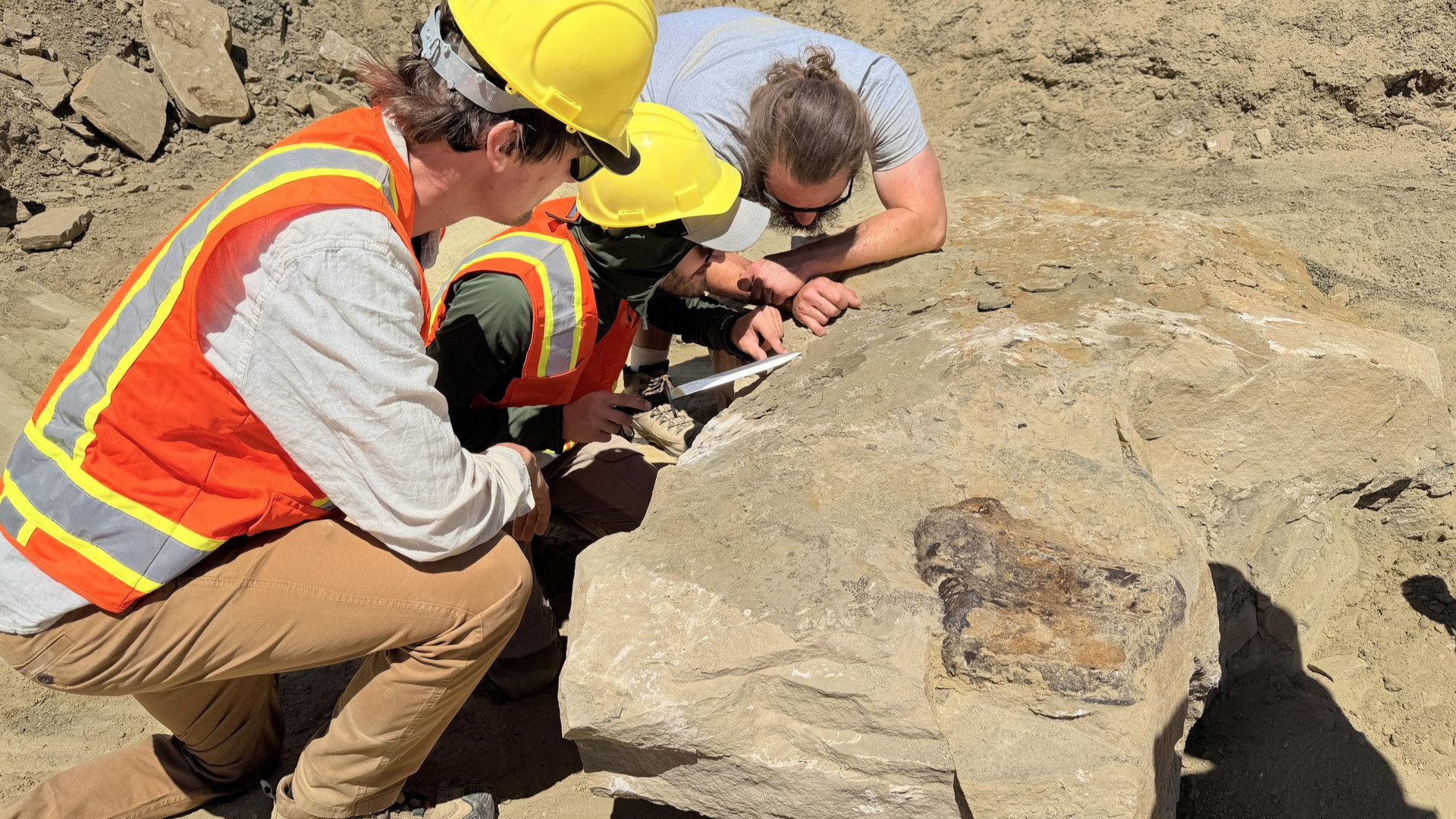
This year marks the 10th dig season for Mission Jurassic™ at the Jurassic Mile® dig site, a fossil-rich square mile in Wyoming's Badlands that we study and excavate with our international partners. When we began this journey into the Late Jurassic Period, we knew the site was special because of the diversity of dinosaur bones, trackways, and fossilized organic material (including plant life and animals other than dinosaurs) contained in the rock. Together, these discoveries help us understand what life was like in the Morrison Formation 150 million years ago.
We’ve made some incredible discoveries at the Jurassic Mile® dig site since Mission Jurassic™ began, including the uncovering, preparing, and displaying of Fred and Midge, our massive sauropods—four-legged, long-necked, plant-eating dinosaurs—that you can see as you enter Dinosphere® and a nearly-complete Allosaurus fossil that our team continues to work on in the R.B. Annis Mission Jurassic Paleo Lab. Our remarkable Allosaurus specimen was our paleo team’s primary focus during the 2026 dig season.Back in 2020, our paleo team was focused on getting as much of Fred and Midge out of the ground and to the museum so they could serve as the focus of Giants of the Jurassic™ when it was added to Dinosphere® in 2022. During that work, they unexpectedly uncovered an articulated nearly-complete Allosaurus fossil! While Allosaurus fossils aren’t uncommon, one in this condition with this amount of completion is extremely rare.
This was a BIG deal.
But the team didn’t want to deviate from their mission to bring back as much of the sauropods as they could. So they excavated the Allosaurus legs and brought them to Indianapolis with the plan to bring the rest of the fossil home in the future. Here’s a brief timeline of our journey to bring this stunningly preserved Allosaurus for you to see in Indianapolis:
- 2020—initial discovery of the Allosaurus; set of fully-articulated legs uncovered
- 2022—discovery of the complete tail and hips
- 2023—our team found the ribs, neck, and back of the skull
- 2024—the snout was discovered in an emotional moment
- 2025—brought back more Allosaurus pieces after a dig season that was shorter than in past years
Meet the Paleo Team
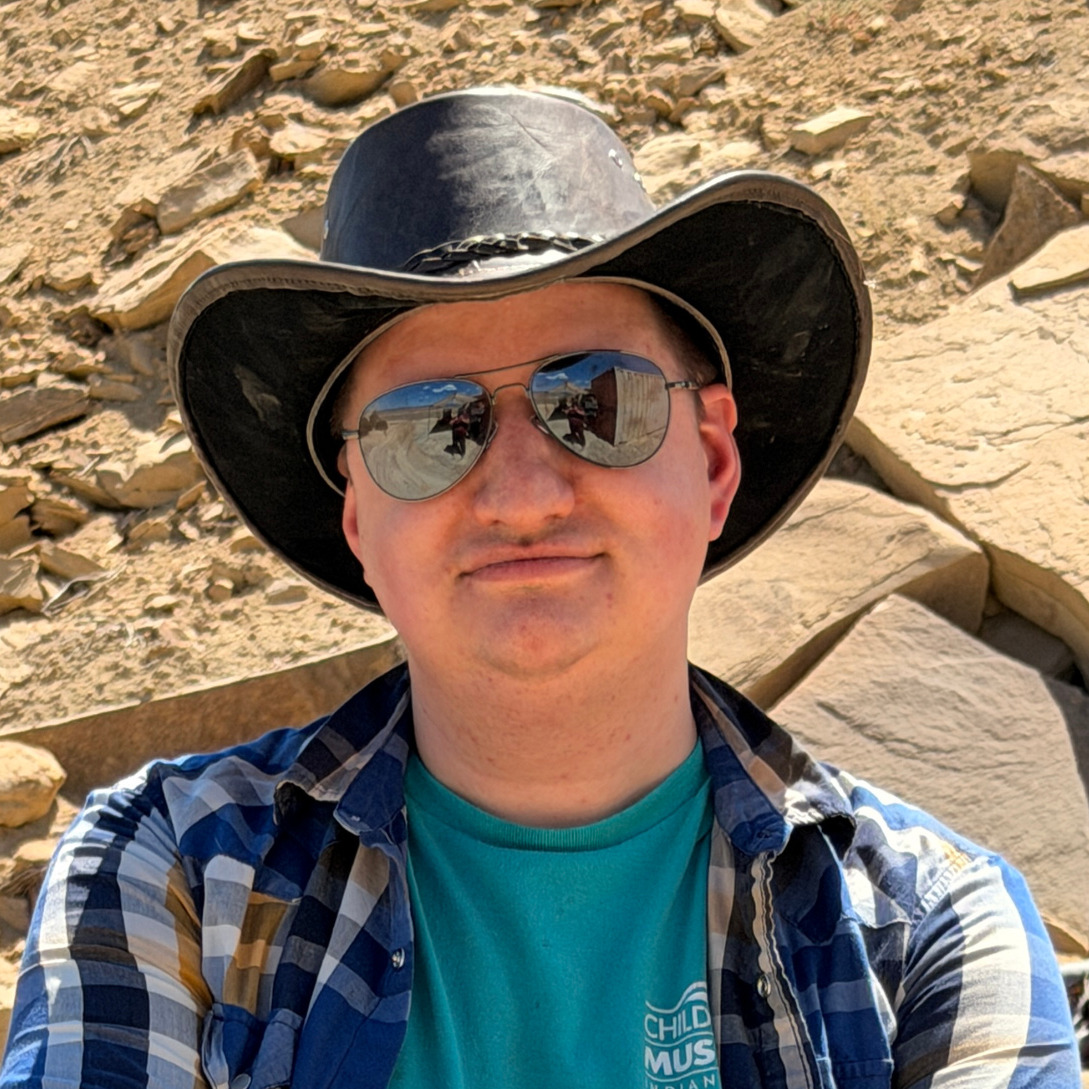
Dr. Joe Frederickson
Lead Paleontologist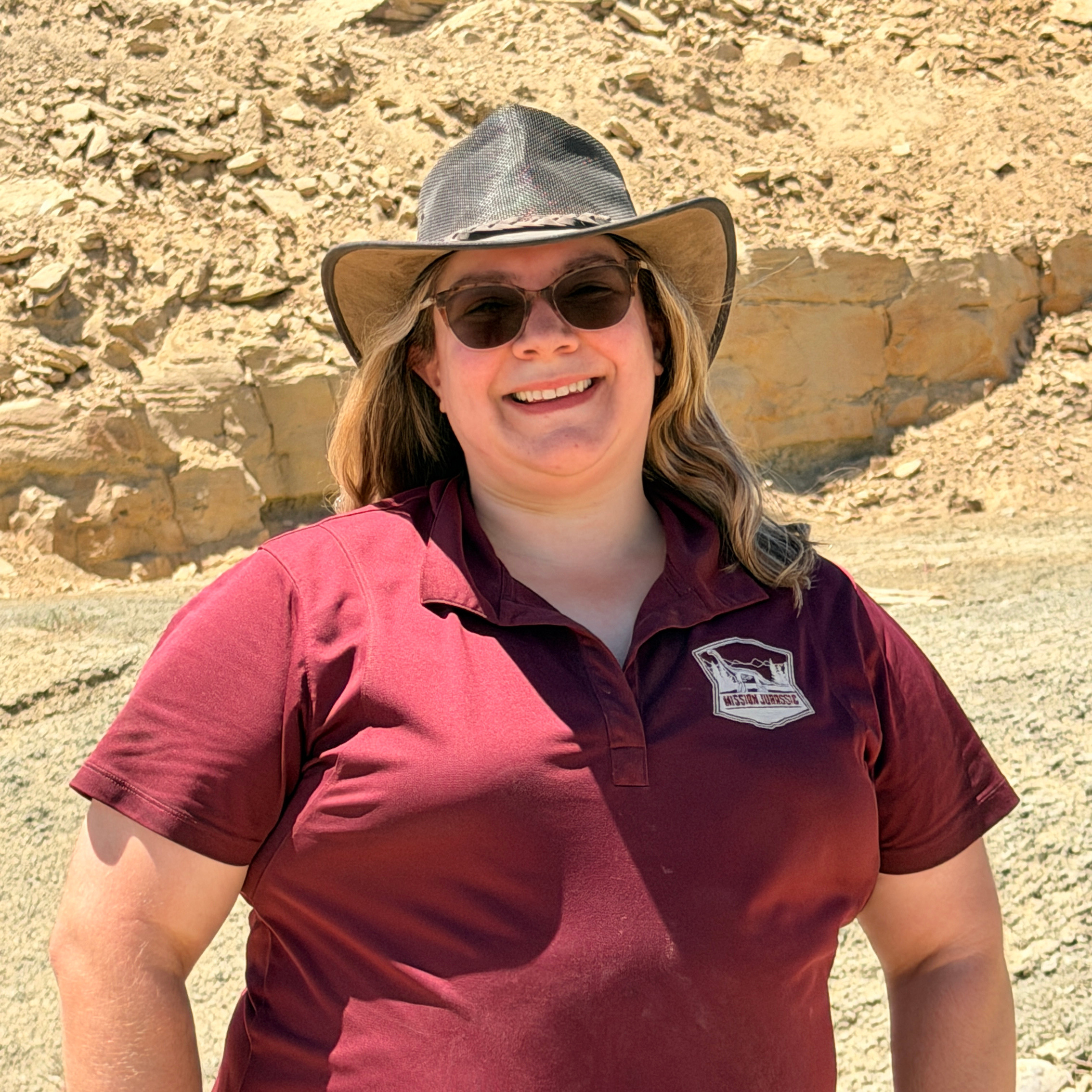
Laura Rooney
Curator of Paleontology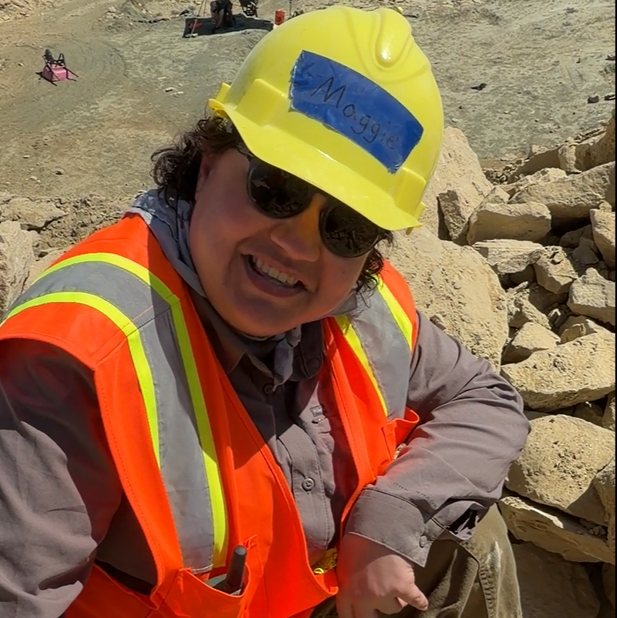
Maggie Rubin
Curator of Natural Sciences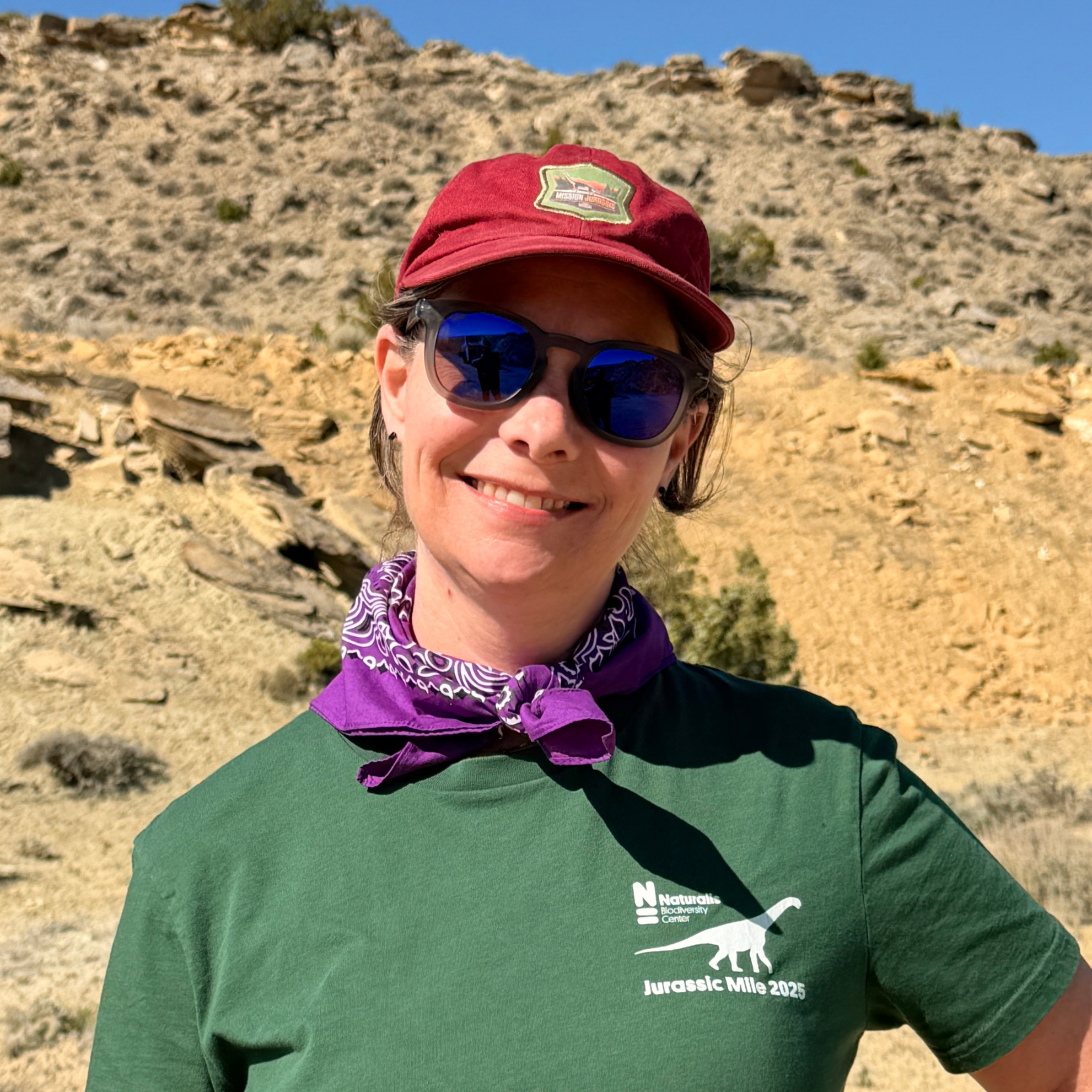
Rachel Gray
Paleontology Preparator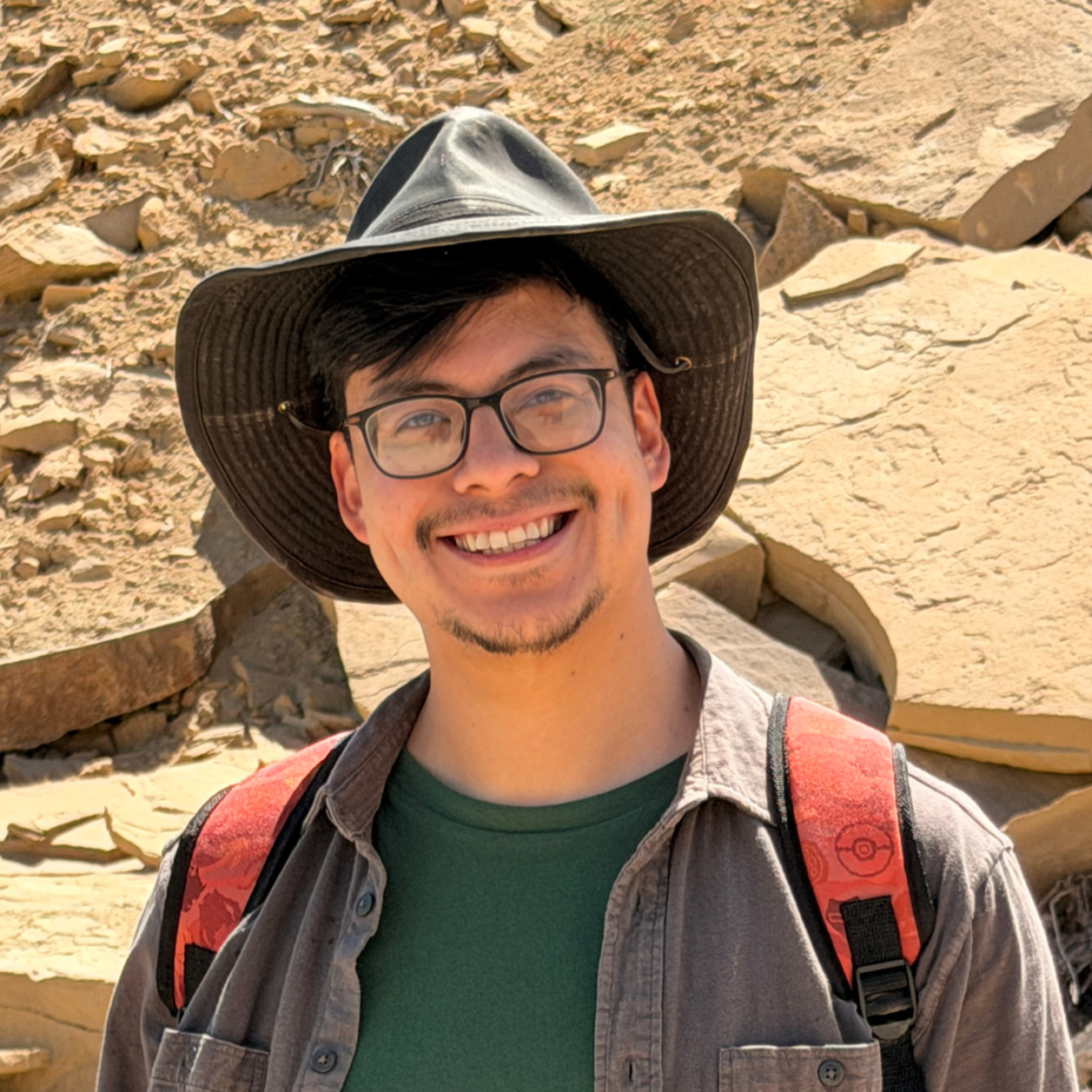
Jorge Plata
Paleontology Preparator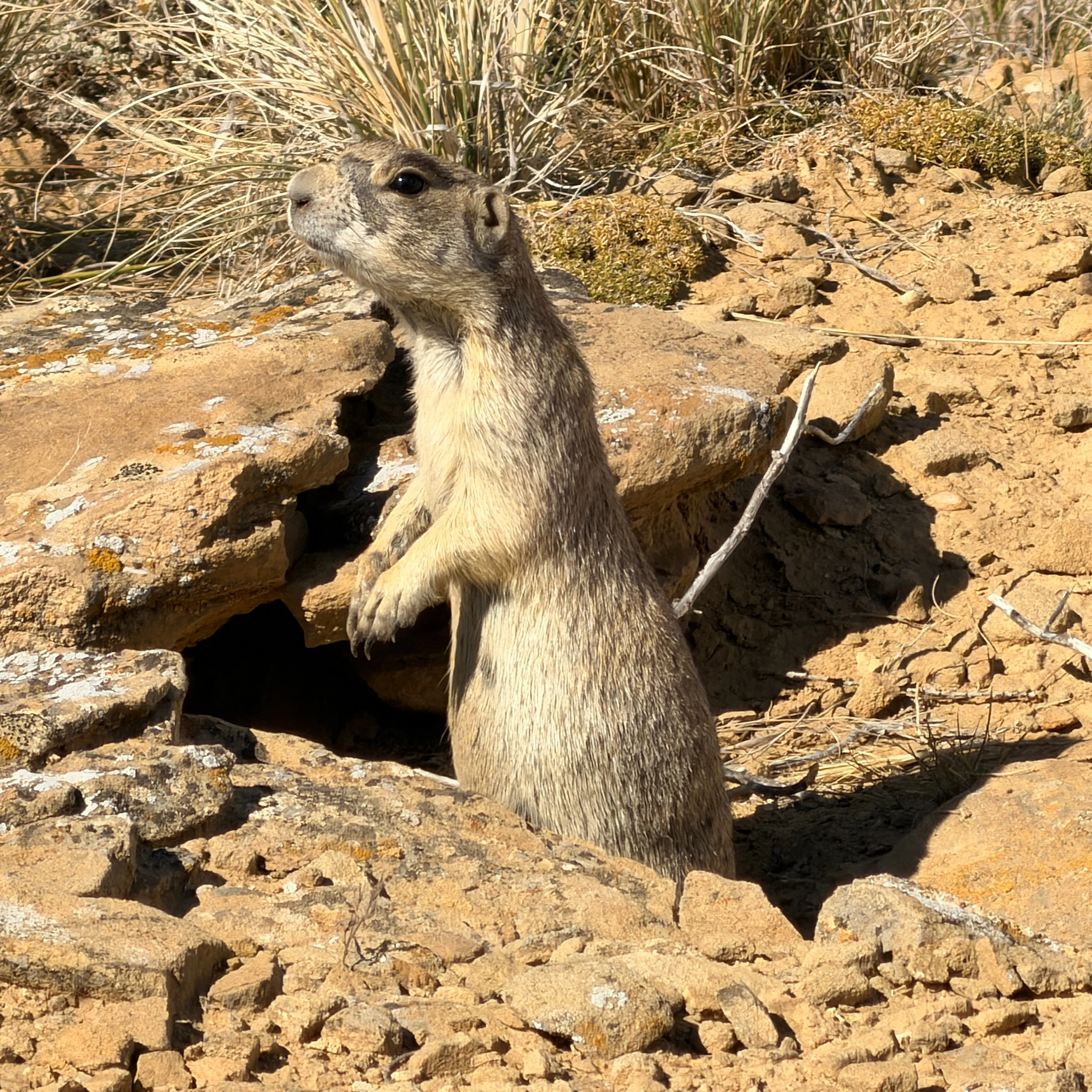
Prairie Jerry
Prairie Dog, Honorary Team Member
 Why Did They Use Excavators?
Fossils like our Allosaurus are buried under layers and layers of rock. Some layers are taller than your average human being. There is no way we’d be able to move all of this rock by hand. Most of the rock layers removed by the excavator do not contain fossils, allowing us to remove them safely and efficiently. without worrying about hitting any bones. If we didn’t use excavators to remove the large chunks of rock, it might be hundreds of years before we could find even a single fossil at this fossil-rich dig site.
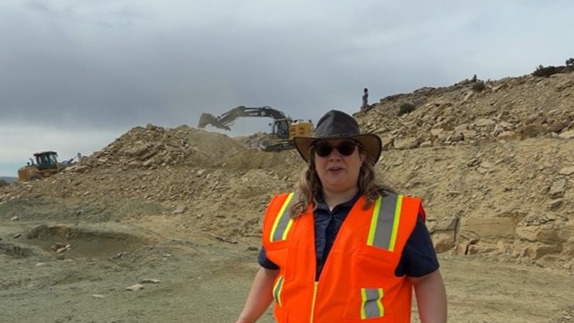
Once we got down to the bone-bearing layer, we carefully checked every scoop for fossils.
Once we got down to the bone-bearing layer, we carefully checked every scoop for fossils.
What if the Excavator Runs Into a Fossil?
We have an incredible team of preparators—people who clean, repair, and preserve fossils—who work to put specimens like our Allosaurus back together, ensuring they’re in great shape before they are put on display. When working on these layers, there’s always a chance that we could accidentally damage a fossil, but we do our best to minimize this through careful observation. In fact, that’s how Maggie found this bone. We think it might be a dorsal vertebra (backbone) from our Allosaurus. We won’t know for sure until we are able to clean and study it in the Paleo Lab
It’s also how we found this giant part of a thigh bone that connects to the hip. Our team believes it likely belongs to a sauropod.
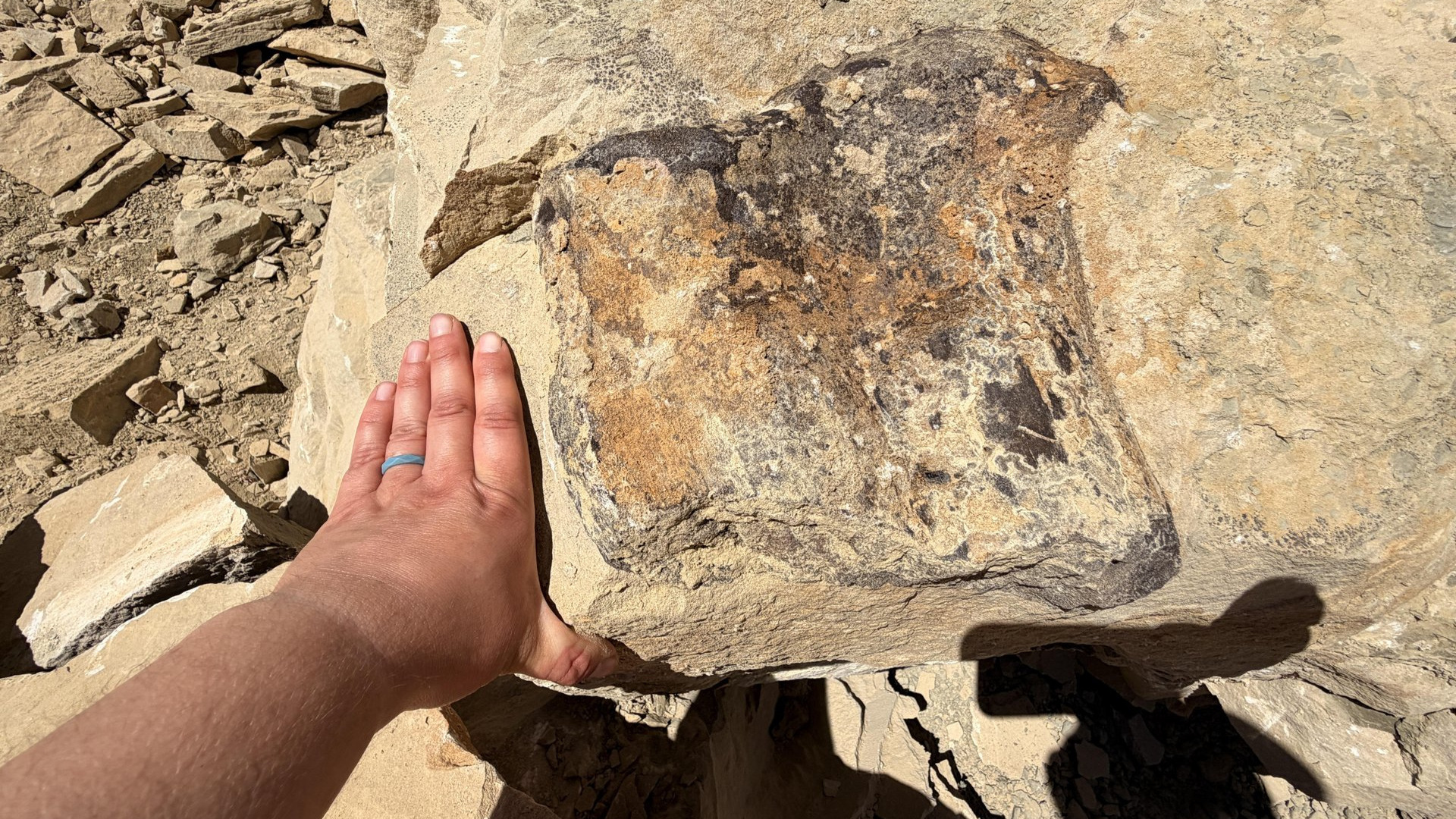
It’s also how we found this giant part of a thigh bone that connects to the hip. Our team believes it likely belongs to a sauropod.
This moment is what’s called a “point of discovery.” That’s when we find a fossil where we didn’t expect to find anything—like when we found the Allosaurus in 2020.
What Do You Do When You Find a Fossil?
When we find a fossil, we want to bring it back to the museum so it can be cleaned and studied. We use a technique called field jacketing to safely remove fragile fossils from the ground and transport them across the country to our museum.
The rock surrounding the fossil helps protect the bone during transportation and storage. Our team brought between one and two tons of rock and fossils back to Indianapolis this year. Now that it’s here, our preparators can begin clearing the matrix—the rock around a fossil. Sometimes, they even have to piece broken fossils back together.
The rock surrounding the fossil helps protect the bone during transportation and storage. Our team brought between one and two tons of rock and fossils back to Indianapolis this year. Now that it’s here, our preparators can begin clearing the matrix—the rock around a fossil. Sometimes, they even have to piece broken fossils back together.
Mission Accomplished? Absolutely
After several years of excavation, our work recovering this Allosaurus specimen from the Jurassic Mile® dig site is largely complete. Over the course of this year’s campaign, our paleo team was able to find many of its missing pieces, including a tail bone, back bone, foot bone, and even some arm bones. In fact, Jorge is already at work putting together some of the pieces of the arm bones that we found. With all of these lingering pieces that were discovered outside the context of the rest of the articulated skeleton, it’s going to be a bit more of a challenge to figure out where these tiny pieces fit on our fossil. That’s a slow, but exciting process.
Our team of paleontologists is making really cool discoveries while they work in the paleo labs, and they’re excited to share their discoveries with you when you visit them in Dinosphere®.
What’s Next at the Jurassic Mile®?
Every trip to Wyoming is full of exciting opportunities. The Jurassic Mile® is a fossil-rich environment, full of more than just dinosaurs. In addition to the cool sauropods and AllosaurusIthat our team has found over the years, there are a lot of other fascinating fossils here that are different from other sites in the Morrison Formation. These little things tell us a lot about the area’s prehistoric environment. So we’re going to keep our eye on the smaller things that were hanging around these giant beasts. These smaller animals, like snails, fish, and reptiles, help tell us about the world in which these creatures lived. Was the water shallow or deep? Or maybe a muddy wetland? Was it freshwater, salty, or somewhere in between? These tiny fossils help us investigate those prehistoric mysteries. These small specimens help us figure that out, and help tell a more complete story about Fred, Midge, and our new Allosaurus pal.
You can dig for fossils alongside our paleo team at The Jurassic Mile® dig site. Fuel your family's curiosity and embark on a once-in-a-lifetime adventure by registering for the Wyoming Dinosaur Dig! Search for clues. Dig for fossils. Document your findings. Be part of science in action!
You can dig for fossils alongside our paleo team at The Jurassic Mile® dig site. Fuel your family's curiosity and embark on a once-in-a-lifetime adventure by registering for the Wyoming Dinosaur Dig! Search for clues. Dig for fossils. Document your findings. Be part of science in action!


